

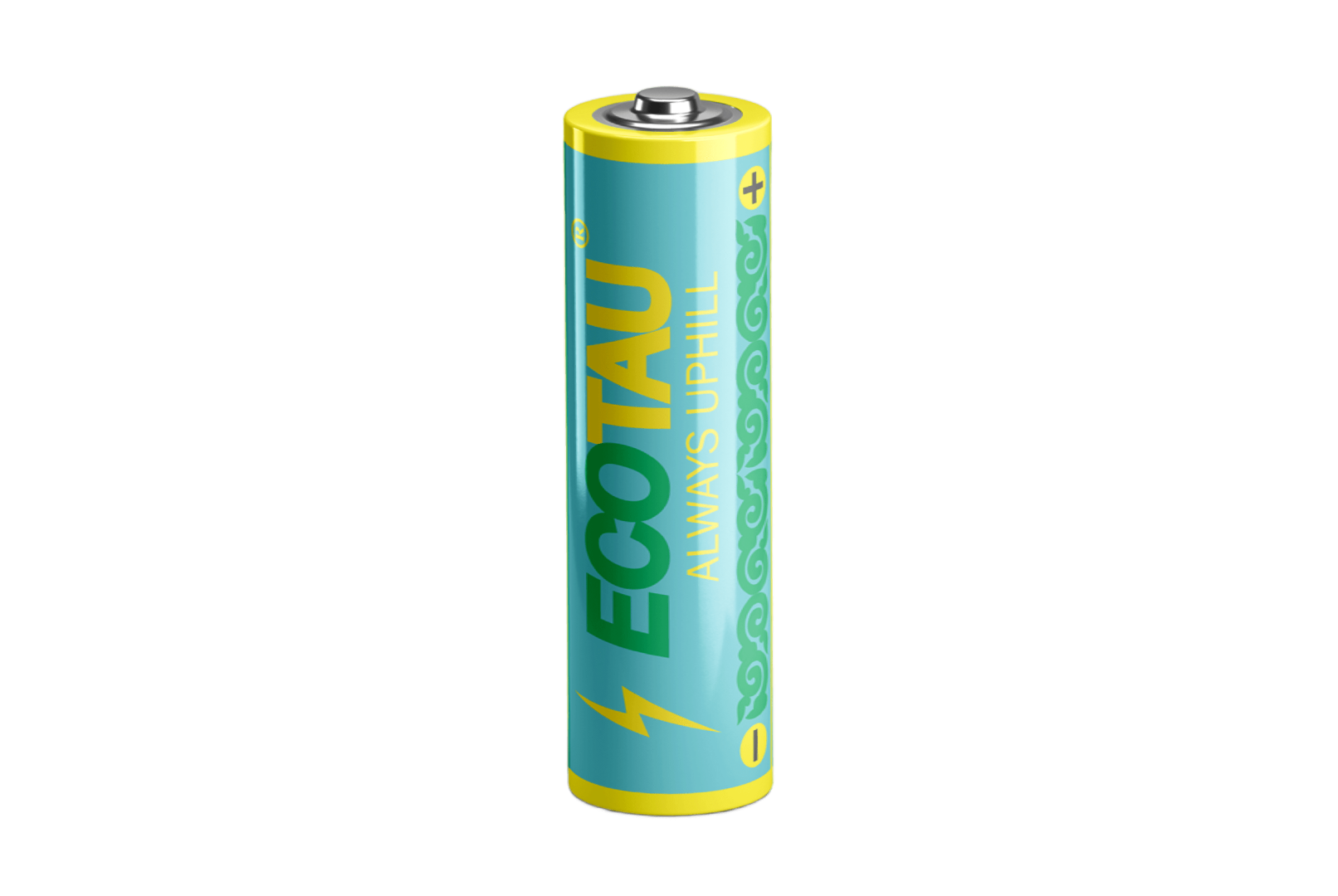
According to our technology


BATERY

Production
Shorter delivery times and stable availability of goods
Quality
Quality control at every stage - from assembly to charge testing
Price
Competitive price due to local production base
Package
Flexible packaging and assortment for the needs of retailers, distributors and corporate customers
We are launching our own battery line, developed taking into account international quality standards and the needs of the domestic market.
AGNAT LLP is the first manufacturer of chemical current sources (CCS)
in the Republic of Kazakhstan.
in the Republic of Kazakhstan.


ALWAYS UPHILL

Production
At the current stage, two of the most popular models have been put into production: LR6 AA and LR03 AAA

Used ECOTAU batteries are accepted back for recycling at 20 tenge.
Our production guarantees the quality made according to our technology
0% addition of mercury and cadmium
The basis: safety lies with an aqueous electrolyte.

Our advantage is a patented, proprietary design.


Partnership with us
Send us your contact information and we will call you back to discuss the details.
In the 1860s, Georges Leclanche, a French inventor, developed the first prototype battery, a carbon-zinc battery, which was used worldwide as the first battery.
The anode was made in the form of a rod made of zinc and mercury alloy (zinc, which was used as an anode in the Volt battery, proved its suitability by experience). The cathode was made in the form of a porous cylinder of crushed manganese dioxide with a small admixture of coal. A carbon rod operated by a current accumulator was inserted into this mixture. Both the anode and the cathode cylinder were immersed in an ammonium chloride solution, which served as an electrolyte. The whole system was called a "liquid element". Although the Leclancher battery was durable and inexpensive, in the 1880s. it was replaced by an improved "dry battery". The anode was made in the form of a zinc container in which the battery was located, and instead of a liquid electrolyte, a paste-like electrolyte was used. This is exactly what a modern carbon-zinc element looks like.
The anode was made in the form of a rod made of zinc and mercury alloy (zinc, which was used as an anode in the Volt battery, proved its suitability by experience). The cathode was made in the form of a porous cylinder of crushed manganese dioxide with a small admixture of coal. A carbon rod operated by a current accumulator was inserted into this mixture. Both the anode and the cathode cylinder were immersed in an ammonium chloride solution, which served as an electrolyte. The whole system was called a "liquid element". Although the Leclancher battery was durable and inexpensive, in the 1880s. it was replaced by an improved "dry battery". The anode was made in the form of a zinc container in which the battery was located, and instead of a liquid electrolyte, a paste-like electrolyte was used. This is exactly what a modern carbon-zinc element looks like.
Despite the fact that most of the chemical components of batteries are not dangerous to the skin, they should be treated in the same way as other chemicals. Be sure to take precautions if you have to deal with expired battery chemicals. Avoid contact with chemicals in the eyes and make sure that they do not enter the body. Otherwise, consult a doctor immediately.
All batteries must be preserved and disposed of. They should not be thrown into household garbage, batteries should be taken to battery collection points for conservation and disposal.
Collection and disposal of used batteries and other batteries
Harm caused by batteries discarded with household waste
One battery thrown into the trash can poisons 20 m2 of land or 400 liters of water! Substances such as Zn, Mg, Pb, MnO2 enter our body through air, water, and food! They affect the following vital organs; lungs, liver, bones, central nervous system, kidneys!
Disposal of alkaline batteries
The easiest way to dispose of Ecotau batteries is to take them to any store that sells them. Agnat LLP plans to install special boxes for collecting batteries in all crowded places!
Tips on the proper use and care of batteries:
Lithium batteries, lithium ion batteries, and zinc-air batteries must be given away for reuse. In addition to "traditional" AA and AAA batteries, batteries used in household devices (such as cameras, mobile phones, laptops, and automatic tools) must be given away for reuse. Pay attention to the labels for reuse on the batteries.
Car batteries containing lead must be delivered exclusively to waste management centers, where they can eventually be reused. Due to the value of the materials used in the battery, many car dealerships and service centers will buy an exhausted battery from you for reuse.
Collection and disposal of used batteries and other batteries
Harm caused by batteries discarded with household waste
One battery thrown into the trash can poisons 20 m2 of land or 400 liters of water! Substances such as Zn, Mg, Pb, MnO2 enter our body through air, water, and food! They affect the following vital organs; lungs, liver, bones, central nervous system, kidneys!
Disposal of alkaline batteries
The easiest way to dispose of Ecotau batteries is to take them to any store that sells them. Agnat LLP plans to install special boxes for collecting batteries in all crowded places!
Tips on the proper use and care of batteries:
- Always use the correct size and type of batteries for this device, according to the manufacturer's information.
- Keep the battery contact surface and battery cell clean by wiping them with a clean pencil eraser or a hard cloth when replacing the batteries.
- Remove the batteries from the device if you do not plan to use them for several months, or if they are powered from the home power supply.
- Make sure that you insert the batteries into the device in the correct way, matching the + (plus) and – (minus) signs accordingly. carefully: In some devices that use more than three batteries, they may seem to be working correctly, even if one battery is inserted incorrectly.
- Extreme temperatures reduce battery performance. Store the batteries in a dry place at room temperature. Do not cool the batteries, as this will not prolong their working time, and avoid placing devices that run on batteries in very warm places.
- Do not attempt to recharge batteries that are not labeled "rechargeable".
- Some used batteries and batteries exposed to extremely high temperatures may leak. A crystalline structure may begin to form on the outside of the battery.
- Getting rid of batteries along with other chemicals
Lithium batteries, lithium ion batteries, and zinc-air batteries must be given away for reuse. In addition to "traditional" AA and AAA batteries, batteries used in household devices (such as cameras, mobile phones, laptops, and automatic tools) must be given away for reuse. Pay attention to the labels for reuse on the batteries.
Car batteries containing lead must be delivered exclusively to waste management centers, where they can eventually be reused. Due to the value of the materials used in the battery, many car dealerships and service centers will buy an exhausted battery from you for reuse.
You cannot use used and new batteries at the same time. This will reduce overall performance and may cause battery leakage or breakdown. We recommend changing the batteries in the device to new ones at the same time.
If the equipment is regularly used at extreme temperatures, we recommend using alkaline batteries, which work better in such conditions than zinc, salt, etc. batteries.
Only batteries with a special label "rechargeable" ("rechargeable/accumulators") can be re-charged. If you try to recharge a non-rechargeable battery, you may damage it or the battery may leak.

Point of Sale
